


Who will crew Sri Lanka’s longline fishing boats in the years ahead? A market assessment informing this initiative found that nearly 90% of crew members in the operations assessed were over 50. The finding brought attention to a pressing workforce concern, alongside an opportunity to connect young people with employment in the sector.
For a young person considering this work, however, an available job is only part of the picture. Understanding what the profession involves, accessing suitable training and feeling prepared for the responsibilities of working at sea all matter. Limited awareness and concerns about safety can make the decision difficult.
In response, the Department of Fisheries and Aquatic Resources (DFAR), in partnership with DVV International, piloted a specialised longline crew member training programme for young people from Puttalam and Ampara. The programme offered an introduction to the profession and an opportunity to build the knowledge and practical skills needed to prepare for work in longline fishing operations.
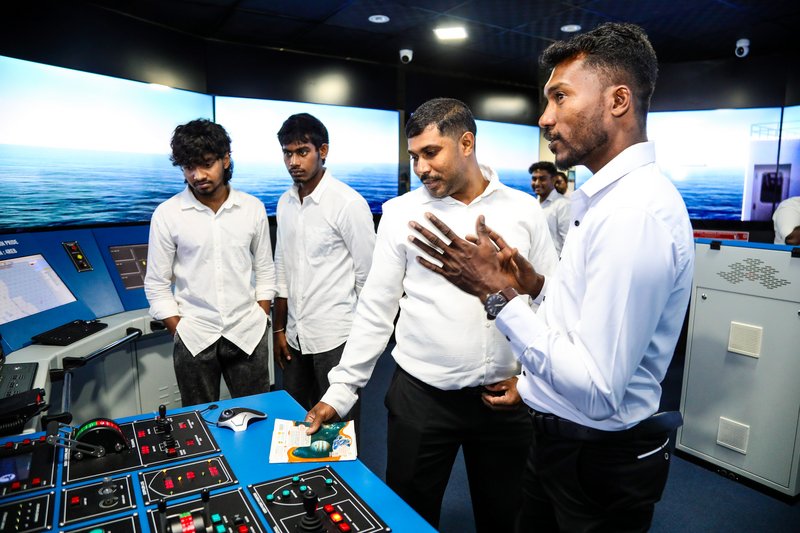
Training took place at the Southern Maritime Training Institute, where simulator facilities allowed participants to become familiar with operational procedures in a controlled environment. This provided a valuable stage between classroom learning and practical experience at sea, giving learners space to practise before facing the demands of an actual voyage.
The response from participants has been encouraging. Young people expressed interest in the career opportunities available and shared their training experiences with friends, prompting others to consider a field they might previously have overlooked. These early responses offer useful insights for further developing the programme, while longer term follow-up will be important to understand participants’ progression into employment.
The pilot illustrates why short courses need to begin with a clear understanding of both industry needs and the questions learners bring. Here, evidence from a market assessment and collaboration with a government partner helped shape a focused learning opportunity linked to a specific occupation.
For DVV International, this is part of making lifelong learning relevant to people’s choices and circumstances. Practical, accessible adult learning can help young people explore unfamiliar professions and prepare for their next step. The experience of this pilot can also inform how specialised training becomes part of a more sustained response to workforce needs within Sri Lanka’s fisheries sector.