


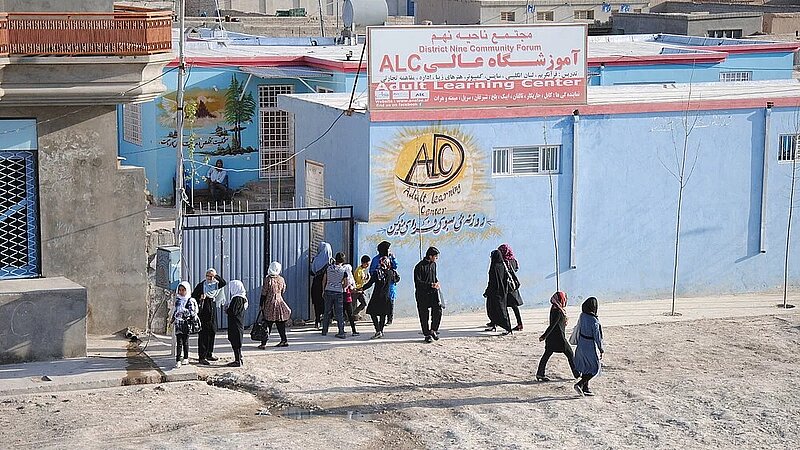
In 2005, DVV International began working with the Afghan National Association for Adult Education (ANAFAE) to support the development of adult learning and education (ALE) infrastructure in Afghanistan. By 2016, twenty-five adult education centres had been established across twelve provinces. However, when the Taliban came to power in 2021 they imposed restrictions, which drastically changed the lives of many people from one day to the next. These also hit the education sector hard: learning centres were closed, programmes discontinued, and women were largely excluded from educational opportunities and forced out of working life. Many people found themselves facing an uncertain future, both personally and professionally. Among them were ANAFAE staff, who felt particularly at risk due to their international connections. They were subsequently evacuated to Germany through the Ortskräfteprogramm (the German government’s resettlement programme for local staff). Their stories show the powerful impact that adult learning and education can have, not least across national borders.
Education across borders
Mohammad Assem Aqil, now 30, is originally from Kabul and currently lives in Jülich in North Rhine-Westphalia. In Afghanistan, after completing his studies he became head of the language department at an ALE centre in 2017 and quickly rose to become an integral part of the training team for all ANAFAE teachers. However, with the political changes in 2021, his work came to an abrupt end and he was forced to leave his homeland. In North-Rhine Westphalia, he quickly found his footing, supported by the region’s adult education provision. At the Jülich adult education center (Volkshochschule - vhs), he initially enrolled in the integration course and was so satisfied with the quality and teaching methods that he went straight on to the B2 and C1 German courses. “The vhs played a crucial role in my language learning and my successful integration into German society,” says Mohammed today. Having completed his second master’s degree in Germany, Mohammed is currently in the process of qualifying for a teaching post in a secondary school. His voluntary work has also been recognised by the state of North Rhine Westphalia through a regional scheme that rewards civic engagement. He is particularly grateful for his scholarship awarded by the German Academic Exchange Service (DAAD), which supported him financially for two years. Having successfully built a new life with his family in Germany, he is keen to contribute his professional experience for the benefit of the German education system and society as a whole.